According to the Bureau of Labor Statistics, Washington is the #5 state in the nation for HVAC pay.
With an average salary of $75,000 its a great place to become an HAVC/R Tech.
Top HVAC Training Programs in Washington
- Lacey, Pasco, Vancouver, Yakima
- Bellevue
- Spokane
- Renton
- Renton
- Brier
- Tacoma
Charter College
Charter College's HVAC/R certificate takes 10 months (66 quarter credits and 790 hours in Washington), combining online theory with campus labs, and prepares students for EPA refrigerant-handling certification. The school notes that Washington technicians also need an electrical trainee license and California contractors a specialty license. Charter's 2026 catalog supplement lists a $25,282 total, for example at Anchorage, AK. Charter's own 2024–25 report showed placement of 36% to 68% across its HVAC/R campuses.
Construction Industry Training Council of Washington (Rating: 3.7 of 5)
CITC’s HVAC program is a comprehensive four-year training designed to equip students with the technical and practical skills needed for careers in heating, ventilation, and air conditioning. Each year requires a minimum of 201 hours and is divided into fall, winter, and spring quarters, with classes covering topics such as safety protocols, trade mathematics, system installation, and troubleshooting. Graduates gain hands-on experience, complete OSHA 10 training, and prepare for certifications like the EPA exam, positioning them for success as HVAC technicians or installers.
Northwest HVAC School (Rating: 4.8 of 5)
The HVAC/R Service Technician Training program is a comprehensive 900-hour course beginning every September, designed to prepare students for a career in the heating, ventilation, air conditioning, and refrigeration industry. The program combines theoretical knowledge with practical training, including internships with industry professionals, ensuring hands-on experience in real-world settings. Students gain expertise in areas such as system design, gas codes, refrigeration, and electricity, with prerequisites for advanced courses to ensure a solid foundation. Graduates are equipped with essential certifications, including EPA Refrigerant Certification and preparation for local licensure exams, enhancing their employability and readiness for the field.
Renton Tech
RTC's HVAC-R Technician program replaced its Commercial Refrigeration certificate, which is closed to new students. The 45-credit Certificate of Completion takes about nine months, and a 90-credit AAS runs in the evening; both start in fall or winter. Coursework covers heating, air conditioning and refrigeration systems, including safe refrigerant handling. Washington's Career Bridge listing puts certificate tuition at $7,655 (checked October 2026) and has no outcome data yet, because the program is new.
Seattle Pipe Trades (Rating: 4.9 of 5)
State of the art training labs provide a variety of HVAC and refrigeration training opportunities. Apprentices work on heat pumps, vrf packages, rooftop equipment, natural gas and electric furnaces. Licensed instructors are current field techs that show students how to build and troubleshoot functioning circuits.
The HVAC School (Rating: 5.0 of 5)
The System and Duct Design and Basic Refrigerant Circuit courses provide focused training on HVAC fundamentals through engaging materials like texts, videos, and podcasts. These courses emphasize thorough review of all materials to ensure readiness for quizzes that test comprehension of the content. By completing these courses, students gain essential knowledge in system design and refrigerant circuits, foundational skills for HVAC professionals.
UEI College
UEI's HVAC diploma is about 36 weeks (720 clock hours on Arizona's listing), with online theory and campus labs twice a week. Courses cover electricity, motors and controls, refrigeration, air conditioning and heat pumps, heating, duct design and load calculations, commercial refrigeration and building automation. Passing the EPA Section 608 refrigerant exam is required to graduate, and UEI also prepares students for ESCO's R-410A certification. UEI lists no externship. Total cost was $21,500 at the Huntington Park, CA campus (2025–26).
How Do You Become an HVAC Technician in Washington?
The three main steps are as follow:
- Enroll in an accredited training program (see above)
- Obtain an apprenticeship and apply for a trainee certificate
- Apply for a license
Below is more information about steps 1 and 2. You must also be at least 16, have a valid SSN, and a high school diploma or GED.
Washington HVAC Apprenticeships
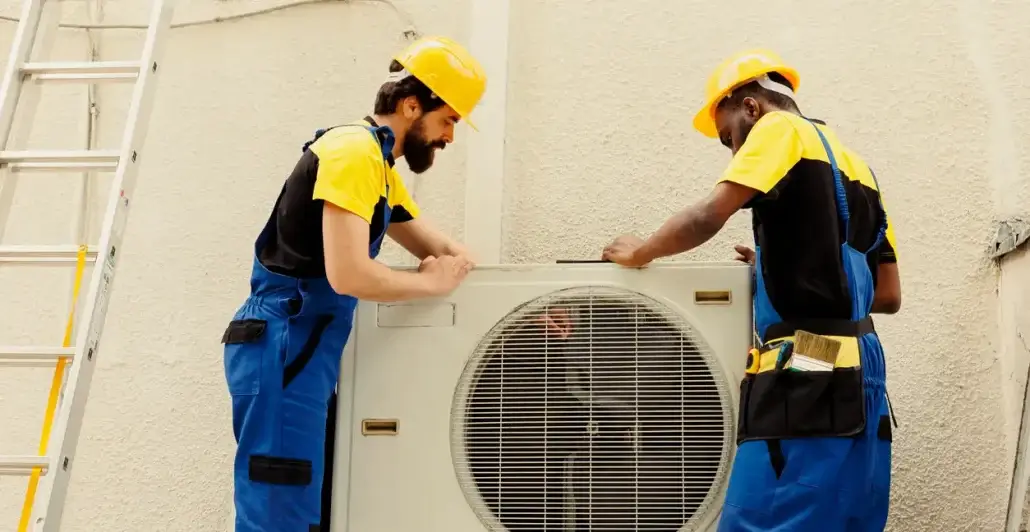
Washington mandates that HVAC/R mechanical workers, including trainees, be licensed as electricians. Upon employment, you must apply for a trainee certificate and work under the supervision of a specialty-certified electrician.
Your trainee certificate must be renewed annually, requiring the completion of 48 continuing education credits each year.
To qualify for specialty electrician licenses and subsequent examinations, you must complete an electrical apprenticeship program recognized by the Washington State Department of Labor & Industries (L&I).
Trainees must be registered in an apprenticeship program to work on commercial job sites unless they perform specialized tasks.
Washington HVAC Licensing & Certification

In Washington, HVAC professionals must be licensed, though the state does not offer a specific statewide HVAC or mechanical license. Instead, HVAC technicians and specialty contractors must be licensed as specialty electricians.
The Department of Labor and Industries (L&I) is responsible for issuing licenses to electricians, plumbers, and contractors.
While there is no statewide HVAC/R license, the licensing for specialty electricians in HVAC/R follows similar guidelines to traditional electrician licensing:
- Journey Level Electrician (EL01)
- Specialty Electrician in HVAC/R Systems (EL06A)
- Specialty Electrician with restricted HVAC/R abilities (EL06B).
Additionally, obtaining an EPA Section 608 Certification for handling refrigerants is required before applying for a state electrician license.
Municipal Licenses
Certain cities and counties within Washington have their own specific licensing requirements for HVAC/R work.
For example, cities like Spokane, Seattle, and Pullman each have unique licensing mandates for professionals working within their jurisdictions.
In some areas, such as Kennewick, a gas installation license is required for those working with natural or other types of gas.
Seattle, in particular, offers several HVAC-related specialty licenses, including a Gas Piping License for installing, altering, or repairing gas systems and a Refrigeration Equipment Contractors License for working on refrigeration systems.
Becoming a Journey Level Electrician (EL01)

As a Journey Level Electrician (EL01) in Washington, you are certified to work in commercial, industrial, and all specialty electrical categories.
To qualify for this certification, several prerequisites must be met.
- Applicants must accumulate at least 8,000 hours of work experience as an electrical trainee under the supervision of a certified journey-level electrician.
- Of these hours, at least 4,000 must be spent on commercial or industrial installations.
- Additionally, trainees must complete 96 hours of basic classroom instruction and be supervised at least 75% of the time.
- Candidates must complete a recognized electrical apprenticeship program to be eligible for the EL01 exam.
- Applications must then be submitted to the L&I.
Becoming a Restricted Speciality HVAC/R Electrician (EL06B)
This certification allows you to work in residential, commercial, and industrial settings within the specified voltage and amperage limitations.
Scope of Work

As a restricted specialty HVAC/R electrician (EL06B) in Washington, you are authorized to install, maintain, and repair HVAC/R systems that do not exceed 240 volts and 100 amperes.
Your work includes installing and maintaining control wiring for HVAC/R systems, such as thermostats, sensors, and other control devices.
You must also obtain the necessary electrical permits.
Requirements
- Work Experience Requirement: Complete at least 2,000 hours of documented work experience in the HVAC/R specialty.
- Supervision Requirement: Ensure that at least 75% of your work experience is under the supervision of a certified specialty or journey-level electrician.
- Practical Training: Gain hands-on experience working within the scope of restricted HVAC/R systems.
Classroom Instruction Requirements
In addition to work experience, you must complete 48 hours of basic classroom instruction related to the electrical trade.
Applying for the EL06B Certification
Once you meet the work experience and classroom instruction requirements, you can apply for the EL06B restricted specialty examination with the Department of Labor and Industries.
Your application must include proof of your prior experience and training.
Becoming a Speciality HVAC/R Electrician (EL06A)
Scope of Work

As an HVAC/R specialty electrician (EL06A) in Washington, you are authorized to install, maintain, and repair HVAC and refrigeration systems up to 600 volts. This includes tasks such as working on air conditioning, heating, refrigeration, and related electrical components and control circuits.
You are permitted to perform this work in residential, commercial, and industrial settings.
Work Experience Requirements
To qualify, you must accumulate 4,000 hours of documented work experience under the supervision of a certified specialty or journey-level electrician.
Classroom Instruction Requirements
In addition to work experience, you must complete 48 hours of basic classroom instruction related to the electrical trade.
Applying for the EL06A Certification
After completing the work experience and classroom instruction requirements, you can apply for the EL06A.
Your application must include affidavits certifying your work experience and certificates of completion for the required classroom instruction.
Certification Renewals in Washington
To renew certification, electrical trainees in Washington must complete 48 hours of basic classroom instruction every two years. These courses must be conducted in a classroom setting.
For electricians, including specialty electricians, the renewal process requires completing 24 hours of continuing education (CE) every three years:
- NEC Updates: 8 hours of CE must focus on updates to the National Electrical Code (NEC).
- Washington State Codes: 4 hours of CE must cover the Revised Code of Washington (RCW) 19.28 and related Washington Administrative Codes (WAC).
- Industry-Related Topics: 12 hours of CE must focus on industry-related or specialty topics from approved courses.
Electricians must submit proof of their completed CE, their renewal application, and the necessary fee to the Washington State Department of Labor & Industries.
State Reciprocity
Washington has a reciprocity agreement with Oregon for specialty electricians, including HVAC/R technicians.
To qualify for reciprocal licensing in Washington, individuals must hold a valid, equivalent license from Oregon and meet Washington’s specific requirements. This includes verifying the Oregon license and demonstrating that Washington’s experience and education criteria have been met.
Conversely, to obtain a reciprocal license in Oregon, applicants must have earned their Washington HVAC/R technician or electrician license through an apprenticeship program recognized by either state.
This process involves submitting the appropriate forms and documentation to the Oregon Building Codes Division to verify the qualifications and licensing history.
Career Outlook
The outlook for HVAC technicians in the state is strong, pay rates are on the rise, and firms continue to seek qualified candidates. Overall, the U.S. faces a significant shortage of skilled trades workers, and the state of Washington is the same.
The local demand for skilled workers is high, as many HVAC technicians’ jobs have been unfilled for over a month.
The U.S. Department of Labor anticipates that HVAC technician jobs in Washington will grow by 15.6%, equating to 1,130 openings annually over the next decade.
While Washington has a high cost of living, HVAC technicians in the Seattle-Tacoma-Bellevue area are the seventh-highest paid in the U.S. Cities like Mukilteo, Everett, and Tacoma boast above-average wages for HVAC technicians (over $30 per hour).
At the same time, Kent and Renton offer electricians over $40 per hour, with the potential for $10,000 in annual overtime pay.