Trade school programs in Colorado, such as those offered at Emily Griffith Technical College, IntelliTec College, and Lincoln Tech, provide a strong foundation for HVAC careers through a mix of hands-on training and theoretical learning.
These programs teach essential skills like system installation, electrical control, piping, and refrigeration, preparing students for roles in residential, commercial, and industrial settings.
Top HVAC Training Programs in Colorado
- Denver
- Colorado Springs, Grand Junction, Pueblo
- Denver
- Aurora
- Lakewood, Arvada
- Fort Collins
Emily Griffith Technical College
HVAC is 660 clock hours (34.5 credits), taken in 5 months full-time or 10 months part-time (Monday, Tuesday and Thursday) at the Branch Campus, and EPA 608 certification is included in tuition. When checked in October 2026 the next full-time start had been cancelled and future dates were still to be set, so ask before planning around it. Colorado residents pay $7,810 (program page, October 2026). Students already working for an HVAC employer can look at the separate HVAC registered apprenticeship.
IntelliTec College
Refrigeration & HVAC Technician is an 18-month Associate of Occupational Studies degree (91.5 credits) at the Colorado Springs and Grand Junction campuses; there is no shorter certificate for new students. Students work on gas furnaces, hydronics, load calculations, duct design and controls alongside its refrigeration courses, and prepare for EPA 608, OSHA-10 and NCCER HVAC Levels 1 to 4. No NATE or HVAC Excellence credential is named. The Grand Junction price sheet (November 2025) lists $40,500.50 including tools, books and uniform.
Lincoln Tech
Lincoln Tech's Air Conditioning, Refrigeration & Heating program is about 1,200 clock hours, roughly 52 weeks on a day schedule, for a certificate or diploma; a 1,425-hour management version leads to a degree. Ten courses cover electricity, heating systems, air conditioning, basic and commercial refrigeration, energy conservation and troubleshooting. Students learn refrigerant recovery and are encouraged to take the EPA Section 608 certification test; ask whether your campus includes it. Lincoln works with Johnson Controls and Hussmann on advanced training. At Mahwah, NJ the total cost was $32,770 (Feb 2025).
Pickens Technical College
Heating & Air Conditioning Service Technology is a 35-credit certificate finished in two semesters, with morning and afternoon sections and an evening section on Mondays and Tuesdays for adults only. Students take EPA certification through the ESCO Institute and OSHA 10 as part of the program. Everything is taught at the Aurora campus; the college claims no programmatic accreditation. 2026-27 tuition is $137 per credit hour for Colorado residents and $274 for non-residents.
Red Rocks Community College
Air Conditioning, Heating, and Refrigeration is an AAS with eight certificates: Air Conditioning, Forced-Air Heating, HVAC Fundamentals, HVAC Control Technician, Hydronic Heating, Refrigeration, and Refrigeration Levels I and II. The catalog says LEED and energy-efficiency topics are built in; it does not describe an apprenticeship or EPA 608 certification, so ask if you need either. Check the catalog for credits and campus. Residents pay $183.75 per credit on campus in 2026-27 after the COF stipend.
U.S. Career Institute
USCI's online HVAC certificate takes as little as three months and costs $1,539 on the monthly plan. It prepares students for the EPA Section 608 exam (Type I and Universal), with fees covered up to $185. It is self-paced coursework without hands-on lab training, and state HVAC licences require supervised work experience.
Many schools offer certifications like EPA and OSHA, along with real-world externships and job placement assistance, ensuring graduates are industry-ready.
With flexible schedules, financial aid options, and specialized coursework, these programs offer an efficient and cost-effective pathway to entering the high-demand HVAC field.
How to Become an HVAC Technician in Colorado

The Colorado Department of Regulatory Agencies (DORA) does not issue state-level HVAC licenses, unlike its licensing of plumbers and electricians.
However, most cities and counties require HVAC professionals to obtain local licensing. Additionally, if your work involves electrical or plumbing aspects of HVAC systems, you’ll need the appropriate state-level electrical or plumbing license.
HVAC Technicians in Colorado are typically expected to be at least 18 years old and have earned either a high school diploma or GED. A valid driver’s license is additionally required. Technicians are additionally expected to complete the necessary training and certifications specific to their local jurisdiction, as requirements vary by location.
HVAC Apprenticeship Programs
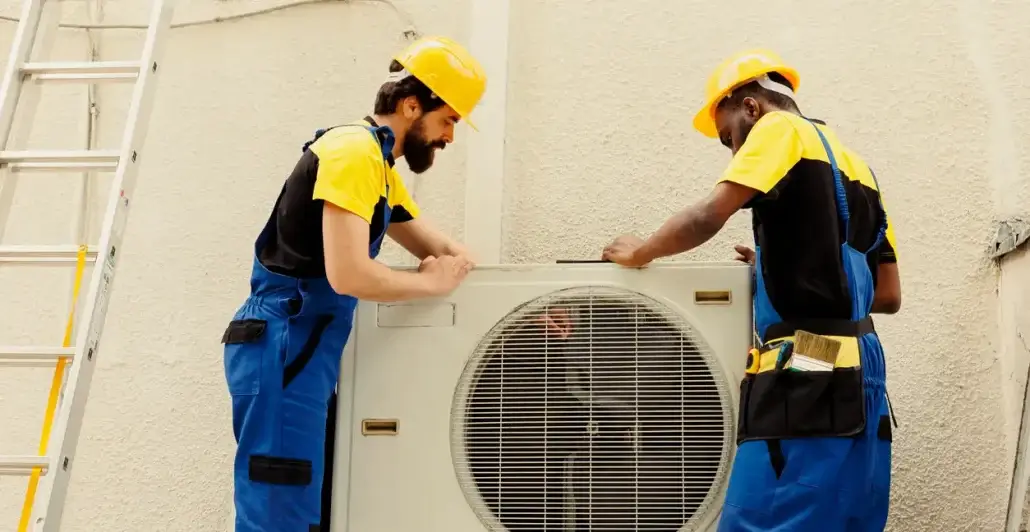
To begin working in HVAC, you can choose between attending a technical school/community college program or starting as an apprentice with an HVAC company.
As an apprentice, you’ll work under licensed professionals while completing required classroom instruction. Many employers provide on-the-job training and evening classes twice weekly to prepare you for certification exams.
License Types and Requirements
While there’s no statewide licensing, local jurisdictions like Denver and Colorado Springs have specific requirements. For example:
Denver HVAC Regional Licenses
- Heating and Ventilating Journeyman
- Heating and Ventilating Class A Supervisor
- Heating and Ventilating Class B Supervisor
- Heating and Ventilating, A/C – Residential Only
Pikes Peak HVAC Regional Licenses
- Mechanical Contractor A (Commercial)
- Mechanical Contractor B (Residential)
- Mechanical Contractor C (Specialty)
- Heating Mechanic IV (HVAC Service Technician)
Each license level requires International Code Council (ICC) Testing and documented work experience. Some jurisdictions may waive testing requirements if you hold state plumbing or electrical licenses.
Examination Requirements
Local licensing typically requires passing technical exams specific to each jurisdiction. Additionally, federal law requires EPA Section 608 Certification for handling refrigerants, with four certification types available: Type I, Type II, Type III, and Universal Certification.
Colorado HVAC Contractor Registration
To operate an HVAC business in Colorado, you’ll need a state-issued business license from the Secretary of State’s Office, worker’s compensation insurance, and unemployment insurance. Additional local requirements may apply depending on your municipality.
Bright Career Outlook for HVAC Techs in Colorado

The career outlook for HVAC technicians in Colorado is promising, as the state faces a shortage of skilled technical workers.
According to the Colorado Springs Economic Development Team, there are over 3,000 job openings for skilled trades, but only about 700 workers entering the field each year.
According to an article on KOAA News5, schools and businesses are stepping up to address the shortage. For example, Power Technical School (PTEC) in Colorado Springs is expanding its facilities and programs to train students in high-demand trades, including HVAC.
PTEC’s new 100,000-square-foot facility offers hands-on training for students from sixth grade through college in fields like HVAC, welding, plumbing, and construction. This expansion aims to prepare students for immediate entry into the workforce with job-ready skills, helping to meet the growing demand for technical workers in the region. The program’s graduates are highly employable, with nearly all securing jobs after completing their training.
This situation demonstrates how the demand for HVAC technicians far exceeds supply. This imbalance incentivizes employers to offer competitive wages and attractive benefits to attract and retain talent.
As a result, workers entering the HVAC industry in Colorado are likely to experience greater earning potential and long-term career security.