TL;DR:
- Skilled trades are a strong option for career changers at 40–55, with solid pay, shorter training than a degree, and steady demand.
- Fast-start choices include welding and heavy equipment operation, which can have you earning in under a year.
- Longer programs, such as dental hygiene or medical sonography, take more schooling but often lead to higher wages and lighter physical demands.
- Licensing rules vary by state but usually follow a clear process.
- Best choice depends on how soon you need income, your comfort with physical work, and whether you prefer technical, customer-facing, or healthcare roles.

Pay, Training Time, Physical Demands & State Licensing
Switching careers in your forties or fifties is more common than you might think. Many people choose the trades later in life because the demand is strong, the schooling is straightforward, and the pay is steady. Employers across the country are struggling to fill skilled trade positions, which means they often care more about your commitment than your age.
If you are considering a move, the questions that matter most are practical ones: How long will training take? What kind of physical strain is involved? What does a typical day look like? And does your state require a license before you can start earning? This guide breaks down those points trade by trade so you can see what makes sense for you.
How to Choose the Right Trade at Midlife
When comparing options, it helps to weigh a few factors side by side:
- Training time vs. pay: Some trades can get you into the workforce in months, while others may take one to two years of study before you see the bigger paychecks.
- Physical demands: Certain jobs involve heavy lifting or climbing ladders, while others lean more toward technical skills or people-facing tasks with less strain.
- Indoor vs. outdoor work: HVAC and electrical blend both, welding is largely indoors, and dental hygiene is almost entirely clinic-based.
- Customer interaction: Some roles, like plumbing and HVAC, involve direct customer service. Others, like welding or sonography, focus more on the work itself.
- Licensing: Each state has its own requirements, so it is worth checking early in the process.
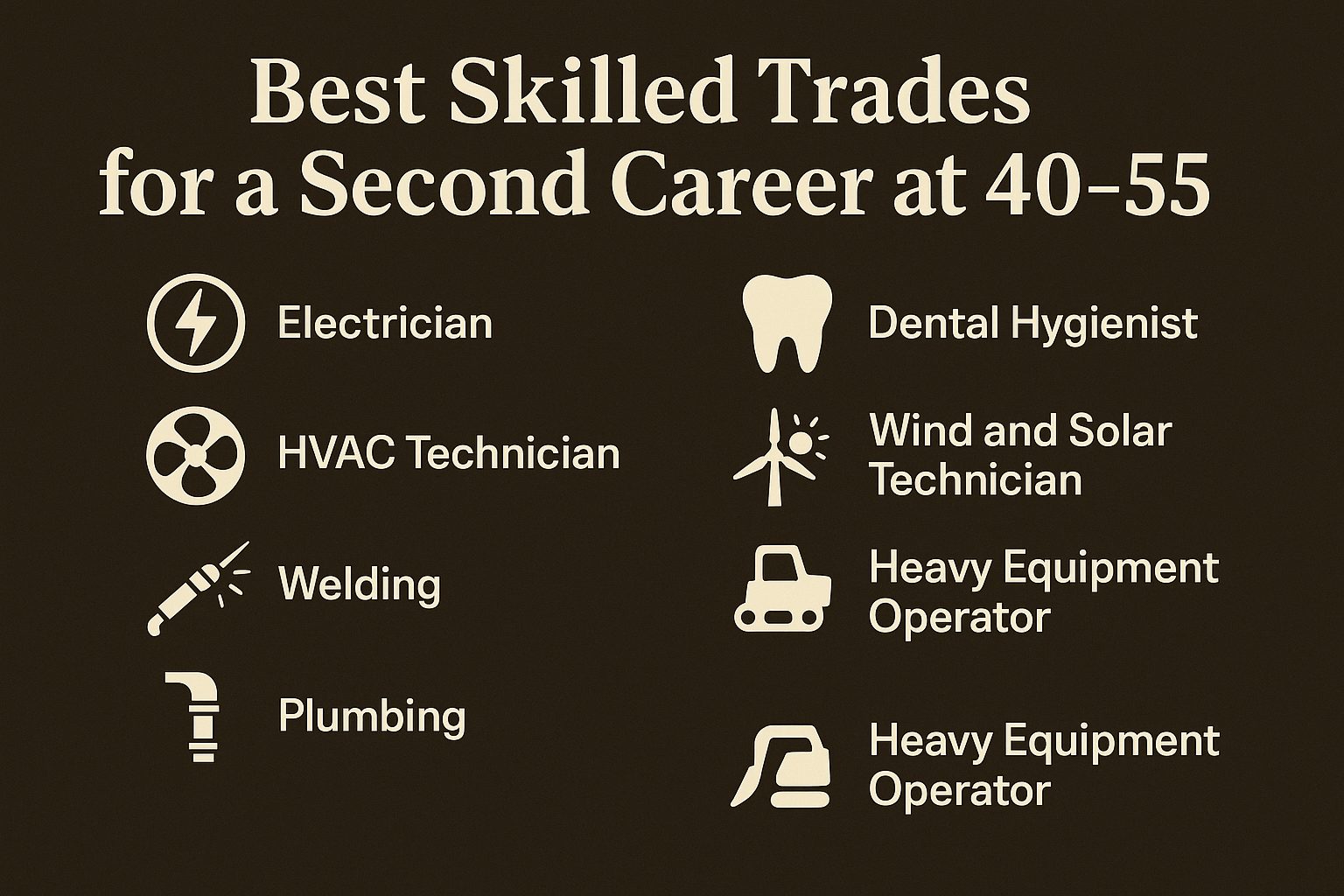
Best Skilled Trades for a Second Career at 40–55
Here are some of the strongest options, with notes on training, pay, and day-to-day life.
Electrician
- Training length: 9–24 months in school, plus a paid apprenticeship that lasts 4–5 years.
- Expected pay: $55,000–$85,000 on average; seasoned electricians often earn six figures.
- Physical demands: Moderate; expect climbing, bending, and working in tight spaces.
- Day-to-day: Installing and repairing wiring, troubleshooting systems, reading blueprints.
- Good fit if you: Enjoy problem-solving, do not mind moderate physical strain, and want long-term job security.
HVAC Technician
- Training length: 6–12 months for a certificate, up to 2 years for an associate degree.
- Expected pay: $45,000–$70,000, with demand in every region.
- Physical demands: Moderate to high; involves lifting, crawling, and working in varied climates.
- Day-to-day: Installing and servicing heating, cooling, and refrigeration systems.
- Good fit if you: Want steady employment and are comfortable with both indoor and outdoor work.
Welding
- Training length: 6–12 months.
- Expected pay: $42,000–$65,000, with specialty welders earning substantially more.
- Physical demands: High; Best choice if you are physically fit for your age as this career requires stamina. You must also be able to work in heat or tight positions.
- Day-to-day: Joining metal parts, reading technical drawings, following strict safety rules.
- Good fit if you: Like precise, hands-on work and enjoy producing visible results.
Plumbing
- Training length: 1–2 years of school, followed by a 4–5 year paid apprenticeship.
- Expected pay: $50,000–$80,000; self-employed plumbers can do even better.
- Physical demands: Moderate to high; lifting, crouching, and working in sometimes messy conditions.
- Day-to-day: Installing, repairing, and maintaining water systems.
- Good fit if you: Value steady, local work and like solving practical problems.
Medical Sonography
- Training length: 18–24 months for an associate degree.
- Expected pay: $65,000–$95,000.
- Physical demands: Low to moderate; standing, some lifting, repetitive motions.
- Day-to-day: You will spend your day operating ultrasound machines and interacting directly with patients and doctors.
- Good fit if you: Want a healthcare role that blends technical skill with patient interaction.
Dental Hygienist
- Training length: 2–3 years for an associate degree.
- Expected pay: $70,000–$100,000; flexible part-time work is common.
- Physical demands: Low; mostly seated work with repetitive motions.
- Day-to-day: Cleaning teeth, teaching patients about oral health, assisting dentists.
- Good fit if you: Prefer predictable hours and want a healthcare career with lighter physical strain.
Wind and Solar Technician
- Training length: 6–12 months for a certificate or 2 years for an associate degree.
- Expected pay: $45,000–$75,000, with strong growth expected.
- Physical demands: High; includes climbing, working outdoors, and managing heights.
- Day-to-day: Installing and maintaining renewable energy systems.
- Good fit if you: Care about clean energy and are comfortable with outdoor, physical work.
Heavy Equipment Operator
- Training length: 3–6 months for a certificate.
- Expected pay: $50,000–$70,000 on average.
- Physical demands: Moderate; long hours, but much of the work is seated.
- Day-to-day: Operating machinery like bulldozers, cranes, and excavators.
- Good fit if you: Like big machines and want a fast track to the job site.
Licensing Requirements by Trade
Many trades, including electricians, plumbers, and healthcare roles, require state licenses. The rules vary, but most follow a clear path once you know the steps.
| Trade | Typical Licensing Requirement | Notes |
|---|---|---|
| Electrician | Yes | Almost all states require licensing. Usually involves classroom training + apprenticeship + exam. |
| Plumber | Yes | Nearly all states require state or local licenses, with exams and supervised apprenticeship. |
| HVAC Technician | Often | Many states require licensing, especially if handling refrigerants (EPA Section 608 certification is always required). |
| Welder | Rarely | Generally no state license, but employers may require certification (AWS or other). |
| Heavy Equipment Operator | Sometimes | No state license for most machinery, but certification required for cranes and some specialized equipment (e.g., NCCCO). |
| Medical Sonographer | Yes (Healthcare Licensing/Certification) | Most states require licensing or certification. Credentialing (e.g., ARDMS) is the norm. |
| Dental Hygienist | Yes | Requires state license after completing an accredited program and passing exams. |
| Wind & Solar Technician | Sometimes | Licensing is less standardized. May require electrical license if wiring systems. OSHA and safety certifications are common. |
Financing and Time-to-Income
The cost of training can feel like a barrier, but there are ways to make it manageable:
- Federal and state grants designed for trade school students.
- Employer-sponsored apprenticeships in plumbing, electrical, and HVAC that pay as you learn.
- GI Bill benefits available to veterans.
- Community college trade programs that cost a fraction of a university degree.
If income is urgent, shorter programs like welding, HVAC, or equipment operation can get you working in under a year.
Pathway Examples
- If you need income in under 6 months: Welding or heavy equipment operation.
- If you can invest 12–18 months for higher pay: Medical sonography or HVAC.
- If you want lower-impact, people-focused roles: Dental hygiene or sonography.
FAQ: Common Concerns at Midlife
- Am I too old to start? No. Many apprenticeships accept trainees into their fifties, and reliability is valued.
- Will I face age bias? Possibly, but the labor shortage means skills often matter more than age.
- Can prior experience help? Yes. Military, construction, or even customer service can shorten training or boost employability.
- Do I need my own tools? Often yes, though employers may provide starter kits or allow gradual purchases.
- Can I train part-time? Many community colleges now offer flexible schedules.
Final Thought
Starting a trade career at 40, 50, or even 55 is not really a question of age. What matters most is whether the work matches your abilities, your financial goals, and meets the lifestyle requires you desire. Opportunities are really there in each of these career paths. So a little leap of faith with careful planning can result in the most satisfying career of your life.