
Updated October 2026
TL;DR:
- Women hold about 11% of all construction jobs, a 20-year high, but only about 4% of the hands-on trade jobs. That gap is an opportunity.
- Electricians, plumbers and HVAC technicians earn a median of about $60K–$65K a year, usually after a paid apprenticeship with no student debt.
- If you’d rather work where most of your coworkers are women, dental hygiene and sonography pay a median of about $95K–$100K with a two-year degree.
- Women’s pre-apprenticeship programs, groups like NAWIC and scholarships can help you get started.
A trade career can give you a good income, skills nobody can take away and, in many cases, a path to running your own business. Most trade programs take two years or less, and many trades pay you while you learn.
This guide covers where women stand in the trades today, 15 careers worth considering with current pay and training, what to expect on the job and where to find support. We’ve split the careers into two groups: well-paid trades where women are still rare, and hands-on careers where women already make up most of the workforce.
Women in the Trades by the Numbers
Women made up 11.3% of the construction industry in 2025, the highest share in 20 years, according to the National Association of Home Builders. That figure includes office, design and management jobs, though. In the hands-on construction trades, women held just 4.3% of jobs in 2025, about 365,000 workers, according to the Institute for Women’s Policy Research.
- Electricians: about 3.5% women
- Carpenters: about 3.1% women
- Plumbers, pipefitters and steamfitters: about 3.1% women
- Painters: about 11% women, the highest share among the major trades
- Construction managers: about 8.5% women
Source: BLS Current Population Survey, 2025 annual averages and IWPR.
Small numbers cut both ways. You may be the only woman on a crew, but employers, unions and contractors are actively recruiting women to fill skilled jobs, and there are more support networks than ever.
Why Women Are Choosing the Trades
- Earn while you learn. Registered apprentices are paid from day one and get raises as their skills grow. You can finish training with a license and no student loans.
- Pay is tied to the job. In union and apprenticeship jobs, wages are set by job classification and experience level, which leaves less room for a gender pay gap.
- Training is shorter and cheaper. Many certificates take a year or less, compared with four years for a bachelor’s degree.
- The work is in demand. Several trades on this list, including HVAC and electrical, are projected to grow faster than average through 2035.
- You can be your own boss. Electricians, plumbers, HVAC techs, cosmetologists and carpenters often go on to start their own businesses.
Quick Comparison: 15 Careers for Women
| Career | Median pay (about) | Share of workers who are women | Typical training |
|---|---|---|---|
| Electrician | $60K–$65K | About 3.5% | Paid apprenticeship, usually 4 to 5 years |
| Plumber | $60K–$65K | About 3% | Paid apprenticeship, usually 4 to 5 years |
| HVAC Technician | $60K–$65K | About 3%* | Certificate program, 6 months to 2 years |
| Welder | $50K–$55K | About 6%* | Certificate program, a few months to 1 year |
| Carpenter | $60K–$65K | About 3% | Apprenticeship or certificate, 1 to 4 years |
| Automotive Service Technician | $50K–$55K | About 2% | Certificate or associate degree, 6 months to 2 years |
| CDL Truck Driver | $55K–$60K | Under 10% | CDL school, about 3 to 8 weeks |
| Construction Manager | $110K–$120K | About 8.5% | Bachelor’s degree, or years of trade experience |
| Dental Hygienist | $95K–$100K | About 95% | Associate degree, usually about 3 years |
| Diagnostic Medical Sonographer | $95K–$100K | About 81% | Associate degree or certificate, 1 to 2 years |
| Licensed Practical Nurse (LPN) | $60K–$65K | About 90% | Certificate or diploma, about 1 year |
| Veterinary Technician | $45K–$50K | About 87% | Associate degree, about 2 years |
| Medical Assistant | $45K–$50K | About 91% | Certificate, about 9 months to 1 year |
| Pharmacy Technician | $45K–$50K | About 77% | Certificate, a few months to 1 year |
| Cosmetologist | $35K–$40K | About 92% | State-approved program, usually 9 to 15 months |
Well-Paid Trades Where Women Are Still Rare
These careers are mostly held by men today, which also means employers are working hard to recruit women. Most offer paid apprenticeships or short training programs.
1. Electrician

Median pay: about $60K–$65K a year (BLS, May 2025)
Women in the job: About 3.5%
Training: Paid apprenticeship, usually 4 to 5 years
Electricians install and repair wiring, lighting, panels and controls in homes, businesses and factories. The work is technical and code-driven, and it rewards careful problem-solving more than raw strength.
- One of the faster-growing trades, with BLS projecting 9% growth from 2025 to 2035 as buildings add EV chargers, solar and battery systems.
- Most electricians learn through a paid apprenticeship, so you earn while you train instead of paying tuition for years.
- A license is portable, and experienced electricians can move into estimating, inspection or their own contracting business.
2. Plumber

Median pay: about $60K–$65K a year (BLS, May 2025)
Women in the job: About 3%
Training: Paid apprenticeship, usually 4 to 5 years
Plumbers, pipefitters and steamfitters install and repair the water, gas, drainage and heating systems in buildings. Much of the day is diagnosing problems and talking customers through repairs.
- Repair and maintenance work keeps demand steady even when new construction slows.
- Like electrical work, plumbing is usually learned through a paid apprenticeship that leads to a state or local license.
- Many plumbers go on to run their own shops.
3. HVAC Technician

Median pay: about $60K–$65K a year (BLS, May 2025)
Women in the job: About 3% of repair trades
Training: Certificate program, 6 months to 2 years
HVAC technicians install, service and repair heating, cooling, ventilation and refrigeration systems. The job mixes hands-on work with electrical troubleshooting and customer service.
- BLS projects 11% job growth from 2025 to 2035, among the fastest of any trade on this list.
- You can start with a short certificate program, then earn the EPA Section 608 certification needed to handle refrigerants.
- Service techs who are good with customers are in high demand, and the career leads to roles in controls, energy efficiency and management.
4. Welder

Median pay: about $50K–$55K a year (BLS, May 2025)
Women in the job: About 6% of production jobs
Training: Certificate program, a few months to 1 year
Welders join and cut metal parts using MIG, TIG, stick and other processes. They work in manufacturing, construction, shipbuilding and repair shops, often reading blueprints to build to exact specifications.
- Welding rewards a steady hand and attention to detail more than strength.
- Training is short, and specialized certifications (pipe, underwater, aerospace) can raise pay well above the median.
- Overall job growth is slow at about 2%, so look for local demand in manufacturing, energy and infrastructure before you enroll.
5. Carpenter
Median pay: about $60K–$65K a year (BLS, May 2025)
Women in the job: About 3%
Training: Apprenticeship or certificate, 1 to 4 years
Carpenters build and repair framing, cabinets, stairs, trim and other structures. Some focus on rough framing on job sites, while others specialize in finish work, remodeling or custom furniture.
- You can see what you built at the end of every day.
- Carpentry skills lead naturally into remodeling, project supervision or running a small contracting business.
- Finish carpentry and cabinetry are less physically punishing than framing and pay well for precise work.
6. Automotive Service Technician

Median pay: about $50K–$55K a year (BLS, May 2025)
Women in the job: About 2%
Training: Certificate or associate degree, 6 months to 2 years
Auto technicians inspect, diagnose and repair cars and light trucks. Today’s vehicles are full of computers, so much of the job is electronic diagnostics rather than heavy wrenching.
- Hybrid and electric vehicles are creating demand for techs with electrical and diagnostic skills.
- ASE certifications let you prove your skills and raise your pay as you go.
- Women make up under 2% of auto techs, so shops looking to diversify their teams often welcome women applicants.
7. CDL Truck Driver

Median pay: about $55K–$60K a year (BLS, May 2025)
Women in the job: Under 10%
Training: CDL school, about 3 to 8 weeks
Truck drivers haul freight locally, regionally or across the country. They inspect their rigs, plan routes, track hours and handle deliveries.
- It’s one of the fastest paths to a solid paycheck, with CDL training measured in weeks, not years.
- Pay in trucking is usually set by the mile or load, not by who’s driving.
- Local and regional routes let you be home most nights, and groups like Women In Trucking offer mentoring and safety resources.
8. Construction Manager

Median pay: about $110K–$120K a year (BLS, May 2025)
Women in the job: About 8.5%
Training: Bachelor’s degree, or years of trade experience
Construction managers plan, budget and run building projects from start to finish, coordinating crews, subcontractors, inspectors and clients.
- It’s the highest-paying career on this list.
- BLS lists a bachelor’s degree as the typical entry path, but many managers work their way up from a trade, then add a construction management certificate or degree.
- Organization and communication matter more than physical strength, and women hold a larger share of these jobs than of most trades.
Hands-On Careers Where Women Are the Majority
If you’d rather start somewhere you won’t be the only woman in the room, these careers offer hands-on work, short training and steady demand.
9. Dental Hygienist
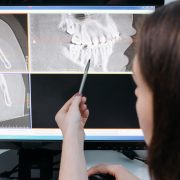
Median pay: about $95K–$100K a year (BLS, May 2025)
Women in the job: About 95%
Training: Associate degree, usually about 3 years
Dental hygienists clean teeth, take X-rays, check for signs of gum disease and teach patients how to care for their teeth.
- It’s one of the best-paying careers you can enter with an associate degree.
- Part-time and flexible schedules are common, which helps if you’re balancing family or school.
- You’ll need to graduate from an accredited program and pass national and state exams to get licensed.
10. Diagnostic Medical Sonographer

Median pay: about $95K–$100K a year (BLS, May 2025)
Women in the job: About 81%
Training: Associate degree or certificate, 1 to 2 years
Sonographers use ultrasound equipment to create images of organs, blood flow and developing babies, and they help doctors diagnose medical conditions.
- BLS projects 14% job growth from 2025 to 2035, much faster than average.
- If you already have healthcare experience, a one-year certificate may be enough to switch in.
- Most employers prefer credentials from ARDMS or a similar registry.
11. Licensed Practical Nurse (LPN)

Median pay: about $60K–$65K a year (BLS, May 2025)
Women in the job: About 90%
Training: Certificate or diploma, about 1 year
LPNs (called LVNs in California and Texas) give basic nursing care, check vital signs, give some medications and keep patient records, working under registered nurses and doctors.
- You can be working in about a year after passing the NCLEX-PN exam.
- Nursing homes, home health agencies and clinics hire LPNs in every state.
- Many LPNs later bridge into registered nursing through LPN-to-RN programs.
12. Veterinary Technician

Median pay: about $45K–$50K a year (BLS, May 2025)
Women in the job: About 87%
Training: Associate degree, about 2 years
Vet techs are the nurses of the animal world. They take X-rays, run lab tests, prep animals for surgery, give anesthesia and teach owners how to care for their pets.
- BLS projects 9% growth from 2025 to 2035.
- Most states require you to pass the Veterinary Technician National Exam (VTNE) to be credentialed.
- Want to start faster? Veterinary assistants can begin with on-the-job training or a short certificate, though median pay is lower, at about $35K–$40K a year (BLS, May 2025).
13. Medical Assistant
Median pay: about $45K–$50K a year (BLS, May 2025)
Women in the job: About 91%
Training: Certificate, about 9 months to 1 year
Medical assistants handle both clinical and office tasks in doctors’ offices and clinics, from taking vital signs and drawing blood to scheduling and updating records.
- BLS projects 13% job growth from 2025 to 2035, much faster than average.
- Training is short and widely available, including hybrid and online options.
- It’s a common first step toward nursing, phlebotomy or office management.
14. Pharmacy Technician

Median pay: about $45K–$50K a year (BLS, May 2025)
Women in the job: About 77%
Training: Certificate, a few months to 1 year
Pharmacy techs help pharmacists fill prescriptions, measure and label medications, manage inventory and answer customer questions.
- Training is short, and many retail pharmacies will train you on the job.
- You can work in retail, hospital, mail-order or long-term care pharmacies.
- Certification through PTCB or NHA is required or preferred in many states and can raise your pay.
15. Cosmetologist

Median pay: about $35K–$40K a year (BLS, May 2025)
Women in the job: About 92%
Training: State-approved program, usually 9 to 15 months
Cosmetologists cut, color and style hair, and many also offer skin, nail and makeup services.
- It’s one of the most entrepreneurial careers on this list. Many cosmetologists rent a booth or open their own salon.
- The median doesn’t include tips, which can add a lot to take-home pay, and a loyal client base raises earnings over time.
- Every state requires a license, which means finishing a state-approved program and passing an exam.
Pay varies a lot by state, experience and employer. Figures are rounded medians, meaning half of workers earn more and half earn less.
What to Expect as a Woman on the Job Site
Most tradeswomen say they love the work. Many also say they’ve had to prove themselves more than the men around them. Knowing the common challenges ahead of time makes them easier to handle.
- Strength matters less than technique. Proper lifting, the right tools and teamwork do most of the heavy lifting. Building general fitness before you start helps in any trade.
- Gear that fits. Gloves, harnesses and boots made for men can be unsafe on smaller frames. OSHA notes that properly fitting PPE is a safety issue, so ask your employer for women’s sizes.
- Sanitation and harassment. OSHA requires employers to provide toilet facilities, and harassment is illegal under federal law. A good employer or union will take complaints seriously. Ask about their policies before you accept a job.
- Find your people. Many tradeswomen say a mentor, even one outside their company, made the difference in sticking with it.
Want an inside look at one trade? Read Is it difficult to be a female electrician?
How to Get Started
- 1. Explore. Take our career quiz, visit a training center or shadow someone in the trade.
- 2. Try a women’s pre-apprenticeship program. Programs like Chicago Women in Trades, Tradeswomen Inc. and Oregon Tradeswomen teach basic skills, tool safety and math, then help you apply to apprenticeships. Many are free.
- 3. Apply for an apprenticeship or enroll in a program. Search registered apprenticeships at Apprenticeship.gov, contact your local union hall or find a trade school program near you.
- 4. Earn your license or certification. Requirements vary by state and trade, from EPA 608 certification for HVAC to a state license for electricians and plumbers.
- 5. Keep building your network. Join a women’s trade group, find a mentor and keep adding certifications.
Organizations and Scholarships for Women in the Trades
- National Association of Women in Construction (NAWIC): local chapters, networking and scholarships through the NAWIC Founders’ Scholarship Foundation.
- Women In Trucking: mentoring, safety resources and advocacy for women drivers.
- U.S. Department of Labor Women’s Bureau: funds programs that recruit and train women for apprenticeships in nontraditional jobs.
- Many trade unions, such as the IBEW (electricians) and UA (plumbers and pipefitters), have women’s committees that connect new apprentices with mentors.
You may also qualify for federal Pell Grants at accredited trade schools. See our guide to trade school scholarships for more options.
Starting a trade later in life? See our guides to the best trades for a midlife career change and trades for older workers.
FAQ
What is the best trade for a woman?
It depends on what you enjoy. If you want the highest pay without a four-year degree, look at electrician, plumber or HVAC technician, all with median pay of about $60K–$65K and paid apprenticeships. If you’d prefer healthcare, dental hygienist and diagnostic medical sonographer pay a median of about $95K–$100K with a two-year degree.
What percentage of tradespeople are women?
About 4.3% of construction trade workers were women in 2025, according to IWPR’s analysis of BLS data. Women made up 11.3% of the whole construction industry, including office and management jobs.
Do women get paid the same as men in the trades?
The gap tends to be smaller than in many other fields, especially in union and apprenticeship jobs where pay is set by job classification. Pay still varies by employer, so ask about wage scales before you accept a job.
Are the trades too physical for women?
Not usually. Most trades rely more on skill, technique and proper tools than on strength. Some, like framing or roofing, are more physically demanding than others, like electrical, HVAC service or welding.
How do I find a pre-apprenticeship program for women?
Search for tradeswomen organizations in your state, ask your local union hall or building trades council, or check Apprenticeship.gov. Many programs are free and include help applying to apprenticeships.
Can I get a scholarship for trade school as a woman?
Yes. NAWIC, many trade unions, industry associations and individual schools offer scholarships for women in the trades. You may also qualify for federal Pell Grants at accredited schools.
Your Next Step
Pick two or three careers from this list that fit your interests, then talk with someone who does the work. Take our two-minute career quiz if you’re still deciding, and search for programs near you below.